What the Green Lanterns Can Teach Us About Power
Removing the Guardrails of Democracy
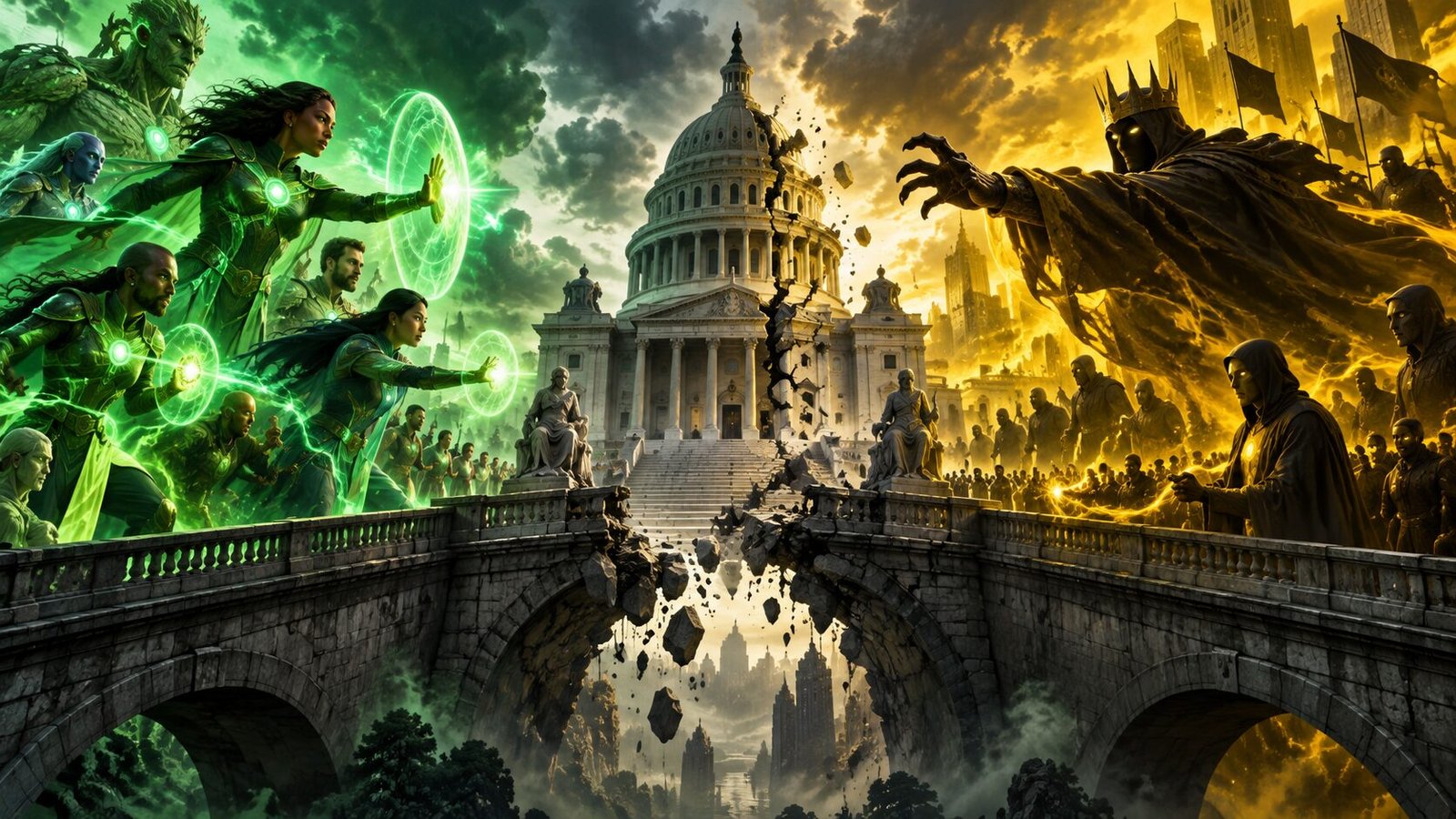
I grew up reading comic books, and although Marvel was always my first love, somewhere over the past decade I developed a much deeper appreciation for the DC Universe and the ideas buried beneath many of its characters. The new HBO series Lanterns, which I highly recommend, brought me back to one mythology that feels especially relevant to this moment: the Green Lantern Corps, an extraordinary collection of beings from different planets, species, cultures, and experiences who are nevertheless bound together by responsibility, shared rules, and the belief that extraordinary power carries an equally extraordinary obligation to protect others. The Sinestro Corps offers a very different understanding of order, one built around fear, domination, and the conviction that security can justify increasingly coercive forms of control. Both possess power, which means the most interesting disagreement between them is not really about strength at all, but about what power is ultimately for. That question has been sitting with me because democratic government was never intended simply to determine who acquires power; it was also designed to establish boundaries around what those entrusted with power may legitimately do once they possess it.
When Rules Become Optional
There are periods in American life when political change feels larger than ordinary disagreements over taxes, budgets, personalities, or competing policy priorities, and the present moment has caused many Americans to reconsider how durable our democratic norms actually are. National Guard troops have been deployed in Washington, debates over redistricting continue to influence congressional competition, and questions surrounding executive authority, institutional independence, and electoral rules have become increasingly prominent in public life.
Each development deserves to be considered on its own merits, but together they raise a larger question about what happens when political actors begin treating long-standing restraints as obstacles rather than protections. Democratic decline does not necessarily announce itself dramatically; sometimes it occurs through hundreds of smaller decisions that gradually make previously unacceptable behavior feel ordinary. The danger begins when rules cease functioning as shared obligations and slowly become suggestions that people follow only when those rules produce outcomes they prefer. A longtime friend Hayden Morgan shared this complex consideration. Sidenote: I am blessed to have a very intelligent, grounded, thoughtful mentor mentee and friend circle.
I do not believe this attitude begins or ends in Washington, because we increasingly encounter versions of it in ordinary life. Consider a teacher calling home because a student has repeatedly disrupted class or failed to complete assigned work, and, for the sake of the example, assume the teacher’s account is accurate and fair. Accountability would ordinarily require the student to confront the consequences of those choices, yet some parents instead demand additional opportunities, exceptions, extensions, or credit for work that was never completed, effectively shifting responsibility from the student to everyone surrounding the student. There is nothing wrong with grace, compassion, or second chances, and healthy institutions should make room for all three, but grace detached from responsibility eventually becomes entitlement. When people repeatedly learn that rules can be renegotiated whenever consequences become personally inconvenient, it should not surprise us when that same philosophy eventually appears in boardrooms, institutions, legislatures, and government.
Two Models of Leadership
The 2001 film The Last Castle offers another useful way of thinking about this tension because Robert Redford’s General Irwin and James Gandolfini’s Colonel Winter embody two fundamentally different theories of leadership while operating within the same institution. Winter relies upon intimidation, humiliation, fear, and positional authority, whereas Irwin gradually earns loyalty by appealing to dignity, courage, shared responsibility, and the better instincts of the people around him. One man requires people to remain beneath him in order to feel powerful, while the other becomes powerful precisely because he helps people recover their sense of dignity and stand taller. That distinction extends well beyond a fictional military prison because every organization, community, and government eventually has to decide which model of leadership it will reward. Leaders can exploit resentment, insecurity, and fear because those emotions are politically powerful, or they can ask people to recognize obligations extending beyond themselves. I watched the movie today at the recommendation of a friend.
I keep returning to a related thought offered by a long time mentor Derek Westbrook: people sometimes seem more willing to wage war over their differences than to build relationships around everything they share. Fear-based leadership understands this weakness exceptionally well because fear requires an enemy, and frightened people become easier to organize when they are persuaded that someone else threatens their livelihood, culture, identity, security, or future. Race, religion, immigration, gender, sexuality, class, geography, and political affiliation can consequently become lines along which neighbors are encouraged to view one another primarily as competitors or threats. Once that happens, concentrations of power can become easier to tolerate because people convince themselves that coercive power will only be directed toward somebody else. The problem, of course, is that a society cannot permanently divide itself into protected insiders and disposable outsiders without eventually weakening the protections available to everyone. Systems and rules when constructed properly enforced fairly protect us all.
Democracy Requires Guardrails
This is precisely why democratic guardrails matter, even when those guardrails are irritating, inefficient, or inconvenient to whichever political faction happens to hold power. Courts, Congress, elections, inspectors general, journalists, civil servants, constitutional protections, and other institutional restraints are operated by imperfect people and will therefore always produce imperfect outcomes, but perfection was never their purpose. Their purpose is friction, because democratic government deliberately distributes authority so that exercising enormous power requires negotiation, justification, oversight, and, ideally, accountability. Once citizens begin believing those safeguards are legitimate only when they restrain their opponents, constitutional government becomes dangerously conditional. The real test of democratic commitment is therefore not whether we support rules when they advance our interests, but whether we remain committed to them when they frustrate us.
We Are the Guardrails
Still, recognizing those tensions should not become an argument for despair, because democratic institutions ultimately depend upon millions of ordinary people continuing to participate in them. Citizens continue to vote, organize, protest, teach, investigate, litigate, write, debate, and challenge those entrusted with authority, while independent media and new communication platforms have expanded the number of spaces in which people can learn about government and question those exercising power. The Green Lantern metaphor ultimately brings me back to responsibility because possessing power and accepting limits on its use are supposed to be inseparable ideas. The guardrails of democracy were never merely buildings, laws, courts, or constitutional provisions; they were also habits, expectations, norms, and an underlying agreement that winning an election does not grant anyone ownership of the democratic system itself. Preserving democracy therefore requires something deceptively simple but increasingly difficult: expecting accountability from ourselves with the same intensity that we demand it from people with whom we disagree.
- What happens to democracy when we demand accountability from our opponents while continually searching for exceptions for ourselves?
- When leaders encourage us to fear one another rather than recognize the interests and responsibilities we share, how do we distinguish legitimate disagreement from the deliberate exploitation of division?
Peace and Progress.