
How Ben Shapiro Helped Build the Environment Nick Fuentes Now Exploits
Before getting into today’s topic, I encourage you to check out the latest episode of the Boogie Down Scholar Podcast. In that episode, I talk about this issue and walk listeners through how we arrived at this moment. This blog post expands on my podcast episode.
What we are seeing in conservative media is a perfect example of how harmful ideas can grow, spread, and eventually turn back on the very people who pushed them into the mainstream. Ben Shapiro spent years creating arguments that questioned and attacked many minority groups. Nick Fuentes, who openly identifies as a neo-Nazi, took those arguments and pushed them even further. Their public fight shows how political spaces shift over time and how each new group tries to appear more “authentic” and more extreme than the one before it.
Public conversations change when people hear targeted messages again and again. Shapiro built his career by challenging racial justice, denying the existence of structural inequality, and questioning the validity of gender identity. His arguments rely on oversimplified logic and complete confidence, even when ignoring social science and lived experience. This framing makes the communities he targets seem unreasonable or dishonest. Scholars describe this pattern as “color-blind racism,” which means pretending racism no longer exists while subtly blaming marginalized groups for their own inequalities (Bonilla-Silva, 2017). Great book; I encourage all my Scholars to check it out. When repeated at scale, this kind of commentary does more than share an opinion. It shapes how entire audiences interpret social problems….and we can see the danger I that…Shapiro surely does now…I hope…maybe not.
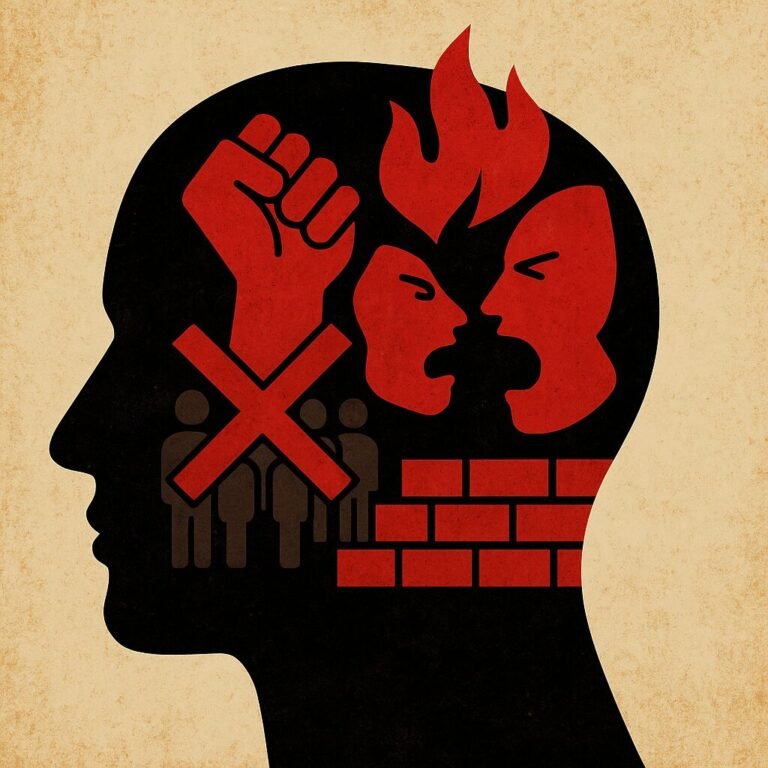
These patterns do not stay still, they fester and metastasize if left unchecked. They create openings for others to go further. They build a path for even more extreme voices. And what we se now is an all-consuming race towards th far extreme of hate to see who can be deemed the truest, purest form of insert whatever here…
This is exactly what allowed Nick Fuentes to gain such a strong following. All four feet and 11 inclhes of hateful benjamin button is loving his grip on the MAGA movement leaders like MAGA suffocated the establishment Republicans. That is KARMA in real time. Even Laura “lunatic Loomer [yea I said it] is starting to realize that the red hat party may have a NAZI problem…you don’t say. Fuentes did not invent a new way of thinking. He took ideas that were already circulating in right-wing media and pushed them into open hate. Arguments that once focused on “cultural issues” became arguments in favor of white nationalism and antisemitism. Researchers who study online radicalization point out that this is a common pattern. When one person pushes the limits of harmful speech, others follow and take it further (Miller-Idriss, 2020). Fuentes moved quickly and has no qualms about sharing his beliefs.
Their audiences show how this escalation works. Fuentes’s supporters, known as Groypers, now position themselves as the “true” and most uncompromising version of the movement. Their relationship to Shapiro mirrors how the MAGA base once related to the older Republican establishment. Yet even that comparison may be too generous, because Fuentes’s project is rooted in explicit hostility toward Shapiro’s own identity as a Jewish man. I have written and spoken before about the internal contradictions of this coalition. Many analysts predicted that this modern Red Hat movement would eventually fracture, because it was built from factions whose core beliefs are not only incompatible but in some cases openly hostile to one another. It is difficult for any movement to remain stable when Christian nationalists stand alongside technocrats who reject religious authority, or when neo-Nazis inhabit the same space as Zionists. A coalition built on shared resentment rather than shared principles will always reach a breaking point. They rose to prominence by directing anger outward at marginalized groups, and now that same anger is turning inward. What older conservatives saw as too extreme, MAGA embraced. What MAGA attempted to soften with patriotic language, the Groypers state without hesitation. Scholars describe this process as a “radical flank effect,” where the presence of an extreme subgroup reshapes what the broader movement considers normal or acceptable (Mudde, 2019).
This cycle feeds itself. Each new group claims it is finally telling the “real truth” that others were afraid to say. Hate grows. Boundaries fall. Extremism becomes a badge of honor.
This is the situation Shapiro now finds himself in. For years, he insisted that discrimination was exaggerated and that marginalized groups were simply demanding special treatment. His audience learned to read empathy as weakness and to treat equity as manipulation. Fuentes absorbed that worldview and turned it back on Shapiro’s own identity. The rhetorical tools Shapiro once used to undermine other communities are now the weapons pointed directly at him. Fuentes has even flipped Shapiro’s familiar talking points and recast Shapiro in the very roles he used to mock: suddenly, Shapiro is accused of sounding like the feminists and “woke” advocates he spent a decade ridiculing. That is the irony of building an argument structure on dismissal and dehumanization. Eventually, someone applies it to you.
Shapiro now faces an uncomfortable choice. He can attempt the nearly impossible task of convincing the Groypers that hatred should come with exemptions for the communities he belongs to. Or he can take the far more honest and intellectually consistent path and finally revisit the critiques liberals and progressives have been offering him for years about systemic inequality and the dangers of rhetorical violence. Either way, Shapiro, the former Vice President, and many of the MAGA movement’s most vocal figures now find themselves in a bind. The Groypers are not interested in carve-outs, nuance, or exceptions. They prefer their hierarchy pure and their hostility unfiltered. And that puts the movement’s earlier architects in a rather embarrassing pickle of their own making.
Shapiro is not experiencing a full moral transformation. But he is learning something many communities already knew. When a movement is built on finding and attacking “outsiders,” the definition of “outsider” keeps expanding. No one is permanently protected in a system that treats human dignity as something that can be taken away.
This feud is not just a personal conflict. It shows how hate spreads inside political ecosystems. Harmful rhetoric rarely stays contained. It grows, step by step, generation by generation. What begins as coded language becomes open hostility. What begins as subtle hints becomes explicit doctrine.
The conflict between Shapiro and Fuentes is a real-time example of how dangerous ideas grow beyond the control of the people who release them. It is a reminder that any movement built on blame, resentment, and dehumanization will eventually turn inward. And once a movement demands purity, even its most well-known leaders can be pushed out.
A Call to Action
This moment calls for more than observation. It calls for rejection. We must refuse to support or amplify any of these figures, because they represent different shades of the same harmful worldview. Whether the hate is dressed up as “logic,” or shouted openly through white nationalist rhetoric, it is still hate. Whether the ignorance comes wrapped in debate tactics or in extremist language, it is still ignorance.
Reject Shapiro. Reject Fuentes. Reject the entire ecosystem that treats human dignity as negotiable. Our communities deserve better, and our democracy depends on choosing voices that build understanding instead of tearing people apart.
Reflective Questions
- How do media influencers shape the boundaries of what their audiences view as legitimate political discourse, and when does that influence become a pathway to radicalization?
- What responsibility do public figures bear when their rhetorical strategies create openings for more extreme actors who build upon their arguments?
- How can societies intervene when escalating factions inside a political movement begin redefining legitimacy through exclusion, purity, and hostility toward marginalized groups?
References
Benkler, Y., Faris, R., & Roberts, H. (2018). Network propaganda: Manipulation, disinformation, and radicalization in American politics. Oxford University Press.
Bonilla-Silva, E. (2017). Racism without racists: Color-blind racism and the persistence of racial inequality in America (5th ed.). Rowman & Littlefield.
Miller-Idriss, C. (2020). Hate in the homeland: The new global far right. Princeton University Press.
Mudde, C. (2019). The far right today. Polity Press.