Fashion, Hope, and the Communities We Too Often Ignore
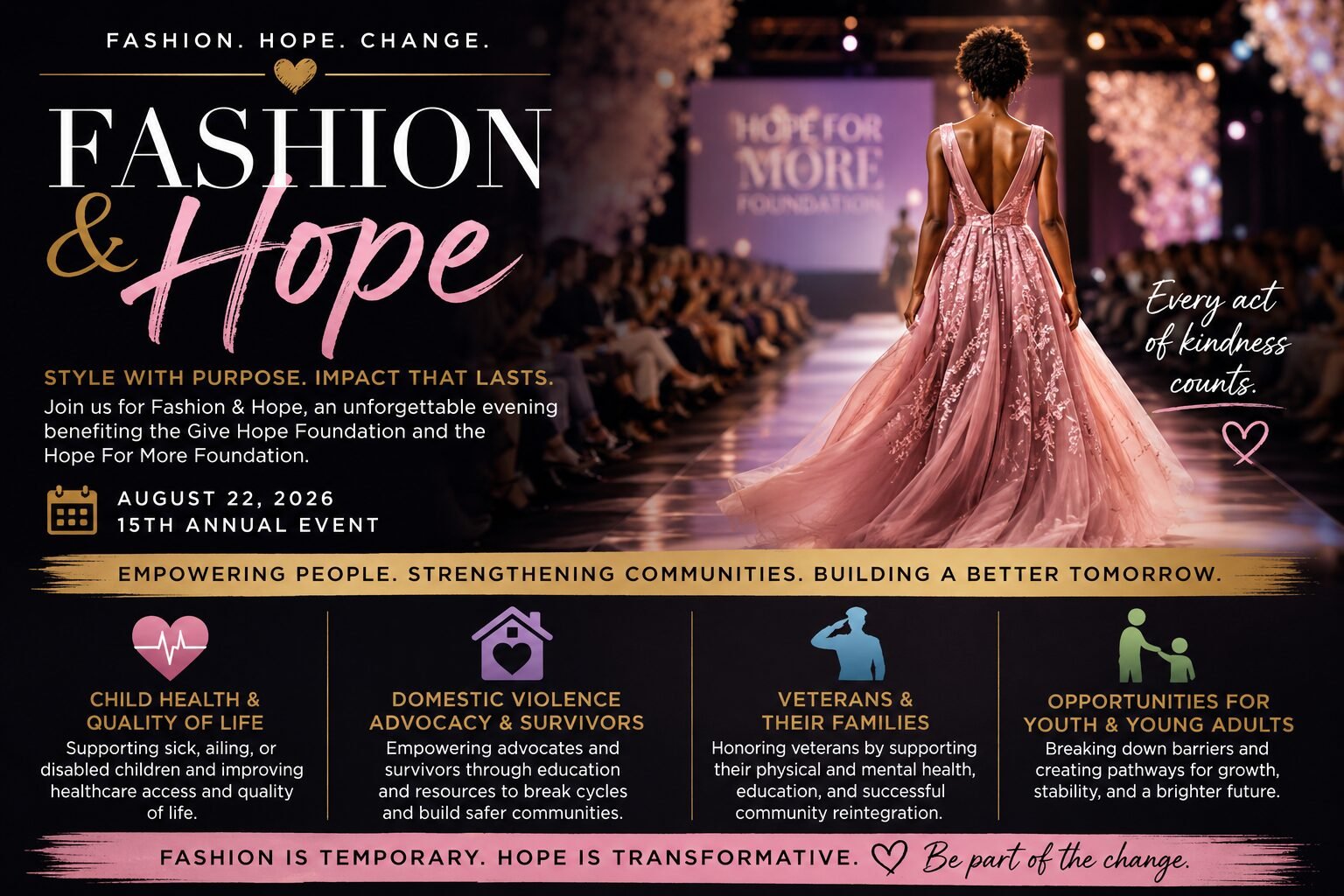
On August 22, 2026, I will attend the 15th annual Hope For More Foundation Fashion & Hope event. At first glance, it looks like what many charity galas aspire to be: fashion, glamour, local celebrities, runway showcases, and philanthropy wrapped into one evening. But underneath the lights and polished presentation is something more important. The event centers organizations doing difficult and often emotionally exhausting work in areas that society routinely underfunds, overlooks, or only pays attention to after tragedy strikes.
Two causes in particular stood out to me: domestic violence advocacy and support for underprivileged children and young adults.
Those issues resonate deeply with me, not just professionally but personally. I have written before about instability, inequity, and the long shadow that difficult childhood experiences can cast into adulthood. What often frustrates me is how selectively society chooses empathy. We celebrate “success stories” after people survive hardship, but we are far less committed to investing in people while they are still struggling through it.
That is why organizations like the Hope For More Foundation matter.
Their mission is broad but grounded in real human need: supporting sick children, advocating for domestic violence survivors, assisting veterans, and creating opportunities for underprivileged youth. These are not abstract policy conversations. These are everyday realities affecting families across Central Florida and across the country.
Domestic violence, in particular, remains one of the most misunderstood social issues in America. People still reduce it to isolated physical incidents when in reality it is often about power, control, fear, financial dependency, emotional manipulation, and long-term trauma. Survivors are frequently asked why they stayed rather than communities asking why abuse was tolerated, minimized, or ignored in the first place. That framing matters because it shifts responsibility away from systems and onto victims.
The same dynamic exists with underprivileged children.
Far too often, children born into poverty, instability, violence, or neglect are judged by outcomes before anyone seriously addresses inputs. We talk endlessly about personal responsibility while ignoring unequal starting points. Access to stable housing, healthcare, safe schools, food security, mentorship, and emotional safety dramatically shapes life trajectories. That is not ideology. That is reality supported by decades of educational and social research.
As someone who works in higher education and student development, I see versions of this every year. Students arrive carrying burdens that many people never see. Some are managing food insecurity. Some are escaping abusive homes. Some are parenting siblings while trying to complete coursework. Others are navigating systems that were never truly designed with them in mind. Yet despite all of that, they persist.
What events like Fashion & Hope do well is remind people that charity should not only be reactive. It should also be preventative and transformational. A scholarship, a safe shelter, counseling access, mentorship, emergency assistance, or simply having one stable adult advocate can fundamentally alter the direction of someone’s life.
And frankly, this is where community partnerships matter more than performative social media awareness campaigns.
It is easy to post inspirational quotes online. It is harder to consistently fund organizations doing frontline work year-round. It is easy to celebrate resilience after the fact. It is harder to invest in conditions that allow people not to suffer unnecessarily in the first place.
I also appreciate that this event merges culture, entertainment, and advocacy. There is nothing wrong with joy, fashion, or celebration existing alongside serious causes. In many ways, marginalized communities have always used art, music, style, and public gatherings as forms of survival and collective healing. Celebration itself can be resistance against despair.
This upcoming event affirmed many values I have written about previously, especially the importance of community investment, structural support systems, and recognizing how lived experiences shape opportunity. It aligns strongly with prior reflections I have shared regarding inequity, trauma, and the need for institutions to move beyond symbolic concern toward meaningful action.
I am looking forward to attending not simply because of the fashion or atmosphere, but because the mission behind the event reflects something larger: the belief that people deserve dignity, safety, opportunity, and hope before they reach a breaking point.
Perhaps that is the real measure of a community. Not how loudly it celebrates success, but how intentionally it supports people while they are still struggling to survive.
Reflective Questions
- What would our communities look like if we invested in prevention and support with the same urgency we react to crisis?
- How many people labeled “at risk” today might thrive tomorrow if someone simply refused to give up on them?