When Interest Converges, Grief Gets a Megaphone
Here we are…
Through out this blog piece I reference back to several videos I made previously leading up to and following the most recent presidential election. Enjoy.
I recorded my “Interest Convergence” episode about six months ago. It opens with a cold open: Eddie H. interviewing a white supremacist, Jared Taylor, who says the quiet part out loud: power matters more than truth, and demographics feel like destiny. From there, I pivoted to what I really wanted my scholars to sit with: Derrick Bell’s idea that “progress” for Black people often shows up only when it also serves the interests of white power, not when America suddenly grows a conscience.
Interest Convergence
That frame matters right now, on the heels of two tragic Minneapolis killings: Renée Good and Alex Pretti. Both were caught on video. Both were followed by officials insisting you did not see what you clearly saw. And yes, the anger circulating right now is justified. The grief is justified. The exhaustion is justified. The only question is what we do with it, together, on purpose, before the outrage gets managed into silence.
Interest Convergence Is Not a New Idea
Bell’s interest convergence is not a slogan. It is a diagnostic historical tool, like a thermometer that tells you what temperature the system is running at. And we are running RED hot right now. Bell argued that landmark gains like Brown v. Board became “possible” in part because racial apartheid was embarrassing the U.S. during the Cold War, so desegregation served America’s global image and strategic interests.
In my Interest Convergence episode, I referenced Martin Tabert’s 1922 death under Florida’s convict leasing system to make the same point: the machine ignored Black suffering for decades, but moved quickly once the victim was a white young man whose story activated broad public empathy and political risk. I learned about him after reading Michelle Alexander’s brilliant work, The New Jim Crow: Mass Incarceration in the Age of Colorblindness.
An interesting side note that just came to mind as I write this: when I was deep in mass incarceration research years ago, some of the scholars tracking the privatization of prisons forecasted, back then, almost 15 years ago, that the new body targeted for free labor and capital would not be Black people, but Brown people. I encourage anyone who reads this and thinks “no way” to go back to the research and books coming out on mass incarceration, privatization of prisons, and prisons being publicly traded on the stock market. Go back and you will see that several researchers and scholars predicted the very people we see being targeted now, my beautiful Brown cousins, were being positioned as the next incarcerated group.
But that is not the purpose of this blog, so back to interest convergence, because it is dawning on me again, in real time, as I write. [I am also open to any interior decorating ideas for a living room and study where I can incorporate my books over the years.]
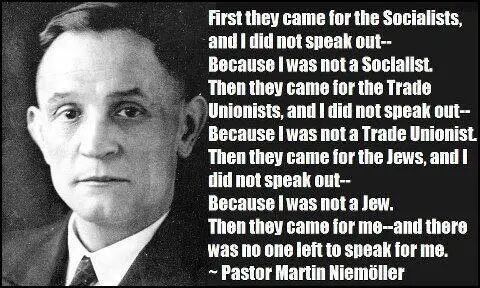
This is the pattern: justice is too often negotiated, conditional, and timed to someone else’s comfort. Too often, we are asked to accept “now is not the time,” when the truth is that the time is always inconvenient to people who benefit from the current arrangement. We forget the words of Martin Niemöller.
Why Minnesota Hit Different for Some People
With Alex Pretti, multiple news outlets (liberal, neutral, and conservative) reported, and verified footage shows, him holding a phone, not a weapon, despite federal claims that framed him as a threat.
That detail is doing a lot of work right now, because it collapses the usual excuses people lean on when they want to look away. Renée Good’s killing, also heavily documented and analyzed frame-by-frame by major outlets, triggered the same ugly dance: footage, denial, spin, and a public told to distrust their own eyes. And I want to name something plainly: being gaslit by the state is not just insulting. It is very very dangerous. It is a warning label.
For many white and upper-middle, middle and working -class folks, this moment feels like a first-time violation. For Black and Brown communities, it feels like a familiar script with a new cast. The grim truth is that when a state can trample “their” rights, it is only a matter of time before it tramples the rights of people who thought they were in the protected class.
The common identity markers are all playing a role in this viciousness right now but central to solidarity is class. Some, not all, wealthy want us fighting against each other, sowing fears and hatred and mistrust.
Fifteen Names We Were Told to Forget
So when people suddenly discover rage at state violence, I get the instinct to say, “Welcome to the party, we been here.” And I am going to be honest: some of us are carrying anger that has had nowhere to go for years except into our bodies, our sleep, our blood pressure, our parenting, our prayers. But I also need us to remember names that built the foundation of this movement: George Stinny (1944), Emmitt Till (1955)Freddie Gray (2015), Sandra Bland (2015), Walter Scott (2015), Philando Castile (2016), Alton Sterling (2016), Terence Crutcher (2016), Stephon Clark (2018), Botham Jean (2018), Atatiana Jefferson (2019), Breonna Taylor (2020), George Floyd (2020), Rayshard Brooks (2020), Daunte Wright (2021), Andrew Brown Jr. (2021), and Tyre Nichols (2023). Black people have always been the proverbial canaries in the coal mine when it came to human rights in this nation. So please remember this moment and try to believe us next time, because this storm will pass, will we be better prepared for the next. It will be in all of our best interests.
The list above is not a complete accounting. It is a reminder that “proof” has never been the real barrier. Video has existed. Pain has existed. Witnesses have existed. What changes is who feels implicated, and who feels unsafe, and whose discomfort becomes politically costly.
Strategy First, Reckoning Later
Here is my hard take: this is not the moment for academic or historical understanding-shaming. Interest convergence is real, and we will absolutely have that long overdue conversation again, in classrooms, in book clubs, in our group chats, and in my little corner of the internet.
But right now, the priority is coalition, clarity, and disciplined strategy. An authoritarian project feeds on isolation, splintering, and purity tests. If anger turns into “I told you so” performances, we hand the opposition a gift. I am not saying swallow your rage. I am saying aim it. I am saying do not waste your fire on people we need beside us, especially when the machine we are up against is counting on us to fracture. And also be discerning of individuals groups coming from now where trying to “lead” the people. Vet people properly. History learns that movements are often destroyed by being opted from within.
Think of Niemöller’s warning not as a historical artifact, but as a present-day organizing principle: people get picked off one group at a time, until nobody is left to push back.
Conclusion: Solidarity Without Amnesia
So yes, I see the justified anger. I also see the opportunity and the danger. The opportunity is that more people are finally paying attention, not because they became better, but because the threat moved closer. And I am not going to scold people for waking up late if they are waking up ready. The danger is letting that realization turn into internal strife instead of a fight against what is happening now.
We can practice solidarity without forgetting Breonnas, Trayvons, and Georges. We can lock arms now, and still demand a deeper moral accounting when the immediate storm passes. We can hold grief tenderly and still be unflinching about the system that produces it. We do not have to choose softness or strength. We can be both.
Reflective Questions
- What would solidarity look like if we treated state violence as everyone’s problem, every time, without needing a “relatable” victim?
- When this moment cools, will we build policies that protect the most targeted first, or will we slip back into comfort politics and call it progress?
Call to Action
If this post put a knot in your stomach, do not let it stop at a knot. Do something with it.
- Name the pattern out loud in your circles, at work, at dinner, in the group chat. Silence is how the machine stays clean.
- Choose one concrete action this week: show up to a local meeting, call an elected official, support a legal defense fund, donate to a community bail fund, volunteer with a local mutual aid group, or help a trusted organization doing on-the-ground work.
- Practice coalition like a discipline, not a mood: reach across the lines where you have been trained not to reach, and bring someone with you.
- If you are new to this feeling: stay. Do not treat this as a moment. Treat it as a responsibility.
- If you have been here: pace yourself and keep your hand on the wheel. We need you whole, not just loud.
If you’re reading this and you’re ready to move beyond reaction into strategy, share this with one person who needs to hear it, and then ask them what they’re willing to do next. And if you want to stay connected, I’d love for you to sign up for my blog and subscribe to my small YouTube channel. Your support genuinely matters, and I appreciate it.