What Fuels Racially Hateful Ideology
Recently, I noticed a phrase gaining traction, and I want to offer a thought on it. I keep hearing some version of the talking point, “Not all Republicans are racist, but all racists tend to be Republican.” I am paraphrasing, but that is essentially the gist. It is catchy, but it is also a sloppy generalization that I want to push back on, because it does not contribute anything productive to conversation or to building genuine connection.
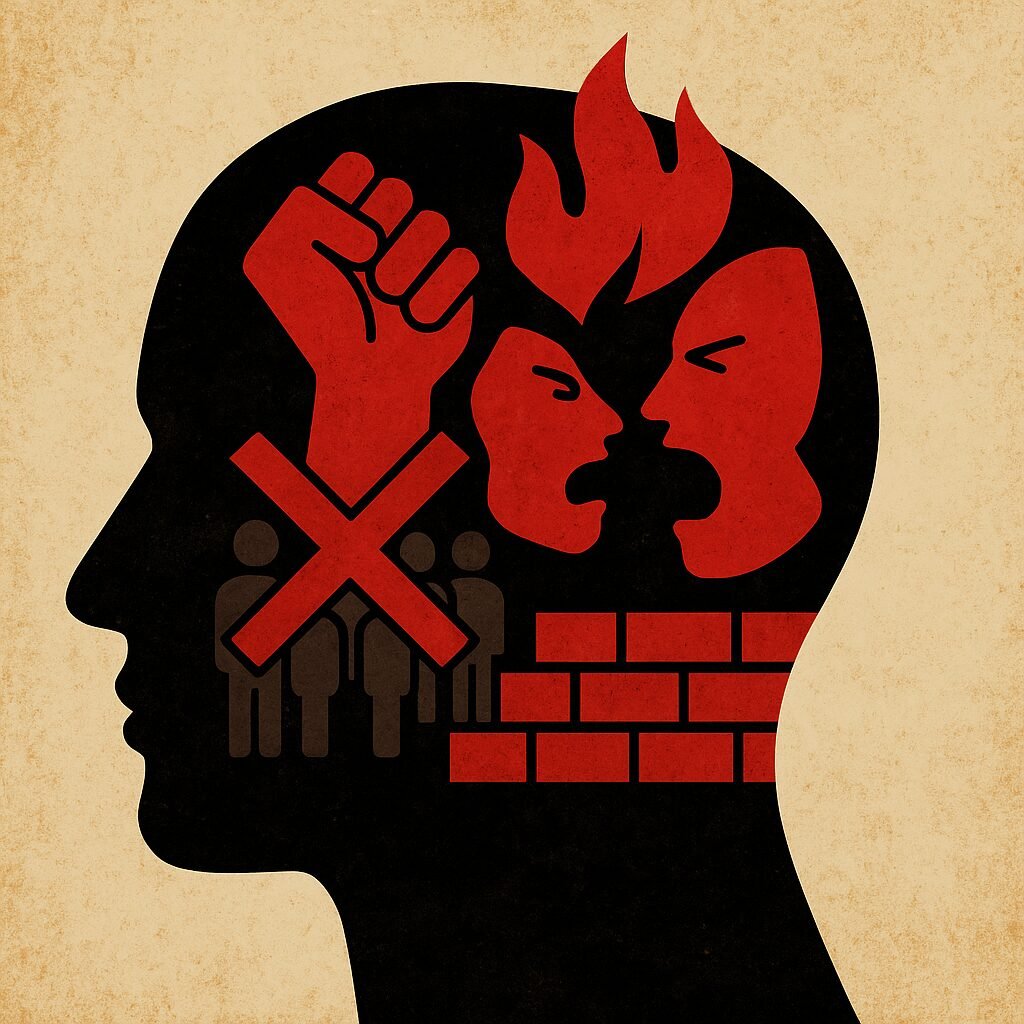
If we want to weaken racist ideology, we have to stop treating it like a game of “spot the bad guys” and start talking about the conditions that allow this nonsense to grow in the first place. Racism is not just one person’s ugly opinion. It is a whole ecosystem of fear, insecurity, half-truths, and centuries of institutional habits that keep getting recycled because someone somewhere benefits from the chaos. These ideas have been shaping this country for generations. They get baked into families, passed through stories, absorbed through culture, and show up in our reactions before we even realize it. Racism operates like an inherited script, whispering in people’s ears long before they ever examine what they believe.
So when I hear oversimplified slogans, it annoys me. My work and analysis have been consistent across all my posts. I, like many others, focus on systems, patterns, and power structures, not just pointing fingers at one person, political party or one voting bloc. Real change comes from understanding the forces that feed these beliefs, not from keeping score in the blame Olympics.
A more accurate statement than the slogan above I am pushing back on is this:
In today’s politics, the available evidence suggests that racial conservatives and outright racists are disproportionately clustered within the Republican coalition. However, racism itself is not exclusive to that party. There are far too many NPAs, Independents, Progressives, and Democrats who also hold racist views.
This framing is sharper, more honest, more accurate, and far more useful for anyone who genuinely cares about reducing racism rather than scoring points online, or tv shows or these now popular group debates. And to be clear, when I say “racism,” I do not believe it is limited to anti-Black or anti-Brown bias. But for the purposes of this blog post, those are the communities I am centering, given the very real challenges they are facing under this administration.
Drivers of Racially Hateful Ideology
Racial resentment does not appear out of thin air. It grows out of environmental messaging, identity threat and status anxiety. When people feel that “their group” is losing power or respect, they can become more open to zero-sum thinking. They start to believe that if another group gains, they must lose. Some media, too many politicians, and a lot of online spaces feed this feeling on purpose. They talk about “replacement,” “attacks on culture,” and frame any move toward equity as discrimination against White people or certain nonwhite groups. This is not simple ignorance. It is a business model that turns shared problems into racial competition.
Economic insecurity is another powerful and effective key driver. People are living with wage stagnation, high housing costs, medical debt, and unstable work. That pain is real. We all are feeling it at the present moment. Instead of pointing to corporate power, weak labor laws, or tax systems that favor the wealthy, some narratives blame immigrants, Black and Brown communities, or urban crime. Racism becomes a shortcut… a catchall excuse: “My life is hard because they are getting what I deserve.” It is a lie, but it is an effective lie that works when you are uninformed, tired, broke, and looking for someone to blame.
Segregation and social distance also keep these ideas alive. Many people rarely have deep relationships across race or class. In my personal and professional life, far too many inflate a loose connection with 1 or 2 people as having a diverse personal and professional network. And to be clear, far too many liberals and progressives fall into this category – thus creating blind spots. Blindspots makes it extremely difficult to see how racism (or any ism for that matter) works beyond our own daily limited experience, so fear-based stories fill in the gaps. At the same time, nonwhite communities can absorb anti-Blackness, colorism, and xenophobia from the same media and institutions. Racism is not a one-way street. It is a system that gives all of us distorted stories about each other, and some people then build their whole politics on those distortions – for personal and political gain.
Generally, anti-racist work focuses on the harm experienced by targeted groups, as it should. But if you want people to change, you also have to understand and explain how racist ideology harms the very people who hold these views. For example, racial resentment and ethno-nationalist politics often bring in leaders who undermine democratic norms while cutting social services, weakening unions, and protecting corporate power. People end up voting against their own access to health care, housing support, and higher wages because they have been convinced that these benefits will be handed to undeserving others. Take the current SNAP situation. It will certainly hurt millions of Black and Brown U.S. citizens. However, an even larger number of white Americans will be affected, including many who voted for the administration responsible for these cuts. Racism does not just harm the groups it targets. It also harms the broader community, including those who believe they are shielded from the consequences. This presents yet another opportunity for Interest Convergence.
Racist narratives also keep communities divided and weaker. When workers in different racial groups do not trust each other, they have less leverage with employers and elected officials. Constant exposure to fearful, angry messaging also has real health costs. Living in permanent outrage is bad for the body and the mind. It is also a tool that helps elites hold power by keeping regular people suspicious of each other instead of organizing around shared interests.
Why the Slogan Fails
The line “Not ALL Republicans are racists but all racists tend to be Republicans” feels like a clever knockout punch in a debate. But , it is also sloppy and harmful. I encourage people to reconsider this statement. In practice, it tells every non-racist Republican, “You are guilty by association forever.” It can send the unintended message to disillusioned conservatives who are starting to see and question racist politics, “You will never be trusted on this side anyway.” It turns a bl;id eye to racism that exists in liberal pockets. It lets liberals avoid looking at racism inside their own spaces and institutions! It also shifts attention away from systems like laws, courts, banks, and schools and puts all the focus back on individual hearts.
That might feel emotionally satisfying in the moment, but it is not strategy. If we truly want to de-radicalize people, pass policy that reduces racial inequality, and defend democracy, we need a broad coalition. I know some bristle at this but the fact is the coalition is stronger because of diversity but shares human decency values. That coalition may very well include people who once voted Republican, people who split their tickets, and people who have held racist beliefs and are trying to grow past them. Treating all of them as permanent enemies is a good way to stay pure and lose. And frankly -fucked up-, who among us has not had terrible position on an issue, learned better and truly wanted to do better.
A better path is to name patterns, not claim that people have fixed, unchangeable natures. You can say, “Racial resentment is much more common in the current Republican coalition than in the Democratic one.” You can say, “Certain right-wing outlets have normalized racist ideas about crime and immigration.” You can also be honest that both parties have backed policies that harm Black, Brown, LGBT+ and Indigenous communities, while still noting that one party today campaigns on resentment more brazenly and openly. It is possible and is necessary to speak with this level of precision.
We can also connect racism to real-world costs when we talk with people who lean right or feel politically homeless. Instead of only saying, “That belief is hateful,” we can add, “Here is how that belief is used to cut your benefits, lower your wages, and weaken your community.” Research on deep canvassing and relational organizing shows that longer, respectful conversations and real stories can reduce prejudice more than shaming or fact-dumping alone. None of this means accepting abuse. It means setting boundaries and still leaving a path back for those who are reachable.
The line we can hold is simple: “I oppose racist policies and rhetoric, no matter who uses them. I will not support candidates or parties that traffic in race-baiting, even if I agree with them on some other issues.” That is different from saying, “Everyone in that party is trash.” One stance challenges actions and structures. The other locks people into identity boxes that are hard to escape.
From Slogan to Strategy
“In today’s politics, racial conservatives and outright racists are disproportionately clustered in the Republican coalition, even though racism itself is not exclusive to that party.”
That statement is honest.
It names a real pattern without turning millions of people into lost causes. From there, the work is harder but more serious. We have to name the drivers of racist ideology, show how it harms everyone touched by it, and choose language and organizing methods that protect targets of hate while still giving people a way to step back from the edge.
If the goal is to win people away from hateful worldviews, not just win arguments, we need less slogan and more strategy.
Reflective Questions
- Where have you seen racial resentment used to turn people away from policies that would actually help them?
- What relationships or conversations in your own life could become spaces for honest, anti-racist growth instead of permanent division?
![The Laws of [Social] Motion: Applying Newton’s Second Law to Systemic Racism and Inequality](https://arianlbryant.com/wp-content/uploads/2023/03/image0.png)